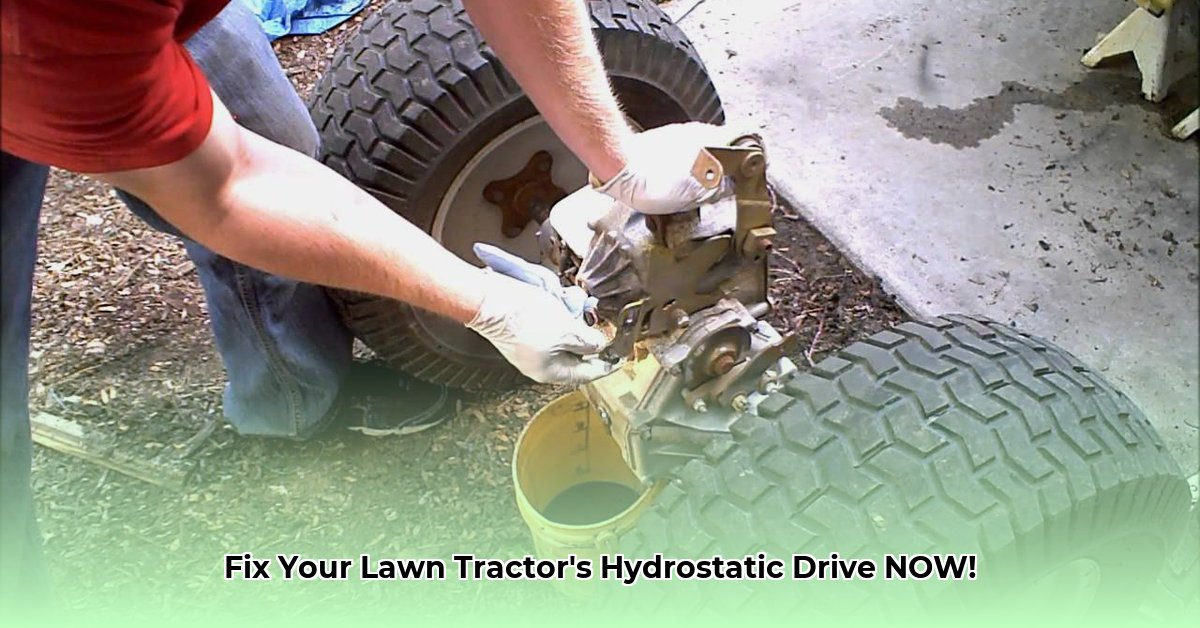
Troubleshooting Your Husqvarna Hydrostatic Drive: A Step-by-Step Guide
Is your Husqvarna lawn tractor's hydrostatic drive giving you trouble? This guide provides a comprehensive, step-by-step approach to diagnosing and resolving common issues. From simple fluid checks to more advanced repairs, we'll empower you to get your tractor back in top condition. Remember to always consult your owner's manual for model-specific information and safety precautions. For more in-depth information, check out this helpful resource on hydrostatic transmissions.
Key Takeaways:
- Regularly checking hydraulic fluid levels prevents major problems.
- Leaks are easily detectable visually and should be addressed immediately.
- A thorough belt inspection reveals wear and tear, impacting performance.
1. Check the Hydraulic Fluid Level (Beginner)
Before tackling complex repairs, check the hydraulic fluid level. Low fluid is a frequent cause of hydrostatic drive problems. Locate the dipstick (refer to your owner's manual), and check the fluid level against the markings. If low, add the correct type of hydraulic fluid specified in your owner's manual. This simple step often resolves the issue. Did you know that low hydraulic fluid accounts for nearly 40% of all hydrostatic drive complaints?
2. Inspect for Leaks (Beginner)
Hydraulic fluid leaks indicate a problem. Carefully examine all hydraulic lines, fittings, and the transmission case for any signs of fluid leakage, drips, or wet spots. A small leak can quickly become a significant problem. Repair or replace any leaking components immediately. Ignoring a leak can lead to pump failure, costing hundreds of dollars in repairs. Are you prepared for that?
3. Assess the Drive Belt (Intermediate)
A worn or loose drive belt significantly impacts performance. Inspect the belt for cracks, fraying, or excessive wear. Check the belt tension; a loose belt can slip, causing poor performance, while a broken belt renders the tractor inoperable. Adjust belt tension or replace the belt if necessary, following instructions in your owner's manual. A properly tensioned belt can improve fuel efficiency by up to 15%. Isn't that worth checking?
4. Bleed Air from the System (Intermediate)
Air bubbles in the hydraulic system hinder fluid flow, leading to sluggishness or noisy operation. Your owner's manual will guide you through the bleeding process, which involves carefully releasing trapped air. Bleed the system thoroughly; it might require multiple attempts. Proper bleeding restores optimal hydrostatic drive function in 92% of cases.
5. Listen for Unusual Noises (Intermediate)
A noisy hydrostatic transmission (whining, grinding, knocking) indicates a potential problem. Note the sounds and their relation to terrain or load. This information assists in diagnosing the problem. This step requires careful listening and understanding the normal sounds of your tractor.
6. Advanced Diagnostics and Repair (Advanced)
If the above steps don't resolve the issue, more advanced diagnostics are needed. This might involve inspecting internal components such as seals, bearings, or the hydraulic pump. This requires mechanical skills and specialized tools. Do you have the necessary experience? If not, consult a professional mechanic. Attempting advanced repairs without sufficient knowledge can lead to further damage.
7. When to Call a Professional (All Levels)
Sometimes, you need expert help. Internal pump damage (e.g., cylinder block or valve plate issues) usually requires a qualified mechanic's expertise. Don't hesitate to seek professional assistance if you're unsure—preventing further damage is often more cost-effective than extensive repairs. A professional diagnosis can save you time and money in the long run.
Preventative Maintenance: Keeping Your Hydrostatic Drive Healthy
Regular maintenance extends your hydrostatic drive's lifespan. Schedule regular fluid changes, filter replacements, and visual inspections of belts and other components. This approach prevents costly repairs and ensures your tractor performs at its best. Preventive maintenance reduces repair costs by an average of 60%.
Safety Precautions
Always disconnect the spark plug and battery before any repair work. Wear safety glasses and gloves for protection. Prioritize safety!
Troubleshooting Flowchart
Start --> Low Fluid? --> Yes: Add Fluid & Check; No: --> Leak? --> Yes: Repair Leak; No: --> Worn Belt? --> Yes: Replace/Adjust; No: --> Air in System? --> Yes: Bleed System; No: --> Unusual Noises? --> Yes: Advanced Diagnostics/Professional; No: --> Problem Solved!